
Generative Search Rewrote the Crisis Management Playbook
July 10, 2026|Updated August 25, 2026|Read time: 5 min.
For decades, crisis management followed a familiar pattern.
A problem emerged. News coverage intensified. Communications teams responded with interviews and statements. Eventually the headlines faded, journalists moved on, and public attention shifted to the next big thing. Generative search has fundamentally changed that lifecycle.
Today, customers, investors, job candidates, and procurement teams consult generative search platforms before making decisions. Instead of reading dozens of articles themselves, they receive a synthesized narrative about your company.
Generative AI has become a reputation auditor, scouring digital environments for the elements of brand perception. Every prompt is effectively asking: “Based on everything available online, what should I believe about this company?”
The response is built from years of third-party commentary, owned content, regulatory actions, review sites, and viral crisis coverage. AI search lays your entire digital ecosystem bare, forcing crisis management to evolve from influencing headlines to managing the digital landscape.
Brands must audit and organize their digital assets to ensure generative AI can find, reveal, and support their preferred narratives.
Every AI Prompt Is a Reputation Audit
Public relations was built to influence what people are talking about today. But generative AI evaluates the entire historical record. A communications team may navigate a difficult news cycle, calm investors, reassure customers, and reduce media attention. From a traditional crisis management perspective, the organization has recovered.
But AI doesn’t care if a crisis was successfully managed. It evaluates what the entire internet says about the company and determines which narratives to spotlight. If the digital record is dominated by controversy, AI-generated answers will reflect that. These answers can persist even after the underlying issue is resolved.
How Generative Search Changes Crisis Management
Generative AI changes crisis management in three important ways.
It strips away nuance
A major corporate crisis often produces hundreds of articles, analyst reports, regulatory filings, social conversations, and opinion pieces. Historically, stakeholders had to find and interpret those sources themselves. Generative AI does that work automatically, producing a tidy, concise summary. These summaries repeat click-driving headlines about fines, penalties, and regulatory actions while leaving out the brand’s perspective.
It suggests consensus and authority
Generative search often delivers its responses in an authoritative, factual tone, using language such as:
- “The company has faced criticism…”
- “There are ongoing concerns…”
- “The organization has been accused of…”
Even when articles contain conflicting viewpoints, speculation, or errors, the AI response can appear to represent a definitive consensus. This can be especially harmful when high-profile accusations are proven false. Without correction, generative AI may continue reporting a false outcome.
It extends the life of a crisis
All news cycles eventually end, but digital records live forever. A past crisis that receives zero media attention today can now become fuel for a controversial AI-generated response, especially if the underlying content holds sway in the digital landscape.
Unrelated incidents can look like patterns to generative AI. This is a problem for smaller companies that don’t receive media attention frequently enough to refresh the online narrative.
Crisis Management Examples From Recent Headlines
Let’s look at two recent crises to see how one brand controlled its narrative in generative search, and the other didn’t.
1) Navient’s lawsuit fallout
Years after its settlements and legal disputes, Navient’s digital footprint continues to be dominated by lawsuits, CFPB bans, and borrower complaints, giving AI systems little choice but to incorporate them into responses.
Although the crisis ended for Navient, unfavorable information ensures negative AI responses. Today, if a prospective borrower asks Google whether Navient offers student loans, the AI Overview tells them to look elsewhere.
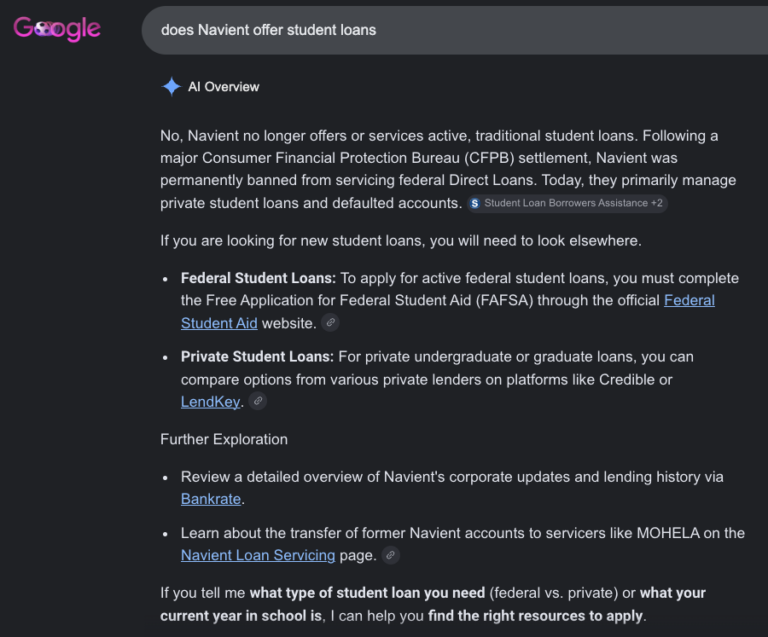
A favorable response would direct students to Navient’s subsidiary brand, Earnest, for private student loans. Instead, AI Overviews sends borrowers to Credible and LendKey and brings the controversy to the forefront.
2) The Campbell’s Company crisis
When a leaked recording captured a Campbell’s executive making offensive remarks about the company’s food, Campbell’s publicly defended its products and investigated the executive’s conduct. The company issued statements clarifying that the executive’s purview was technical in nature. The brand also published information on its website explaining its use of real chicken sourced from USDA-approved suppliers. Campbell’s later confirmed that it had parted ways with the executive.
Rather than allowing third-party coverage to define the company, The Campbell’s Company corrected the record through proactive PR and rich, authoritative, and balanced digital assets. That content provided consumers, journalists, search engines, and generative AI with favorable information to reference.
Campbell’s did not erase the controversy, but it established a clearer factual record and limited the potential reputational damage.
Can Organizations Actually Influence AI?
Yes, but not by attempting to optimize AI systems directly. Generative AI reflects the content and information ecosystem surrounding a brand. Therefore, the target is obvious. Invest in reputation management by creating owned content, consistent messaging, authoritative PR visibility, and a healthier branded search experience.
We’ve seen the impact of these strategies firsthand:
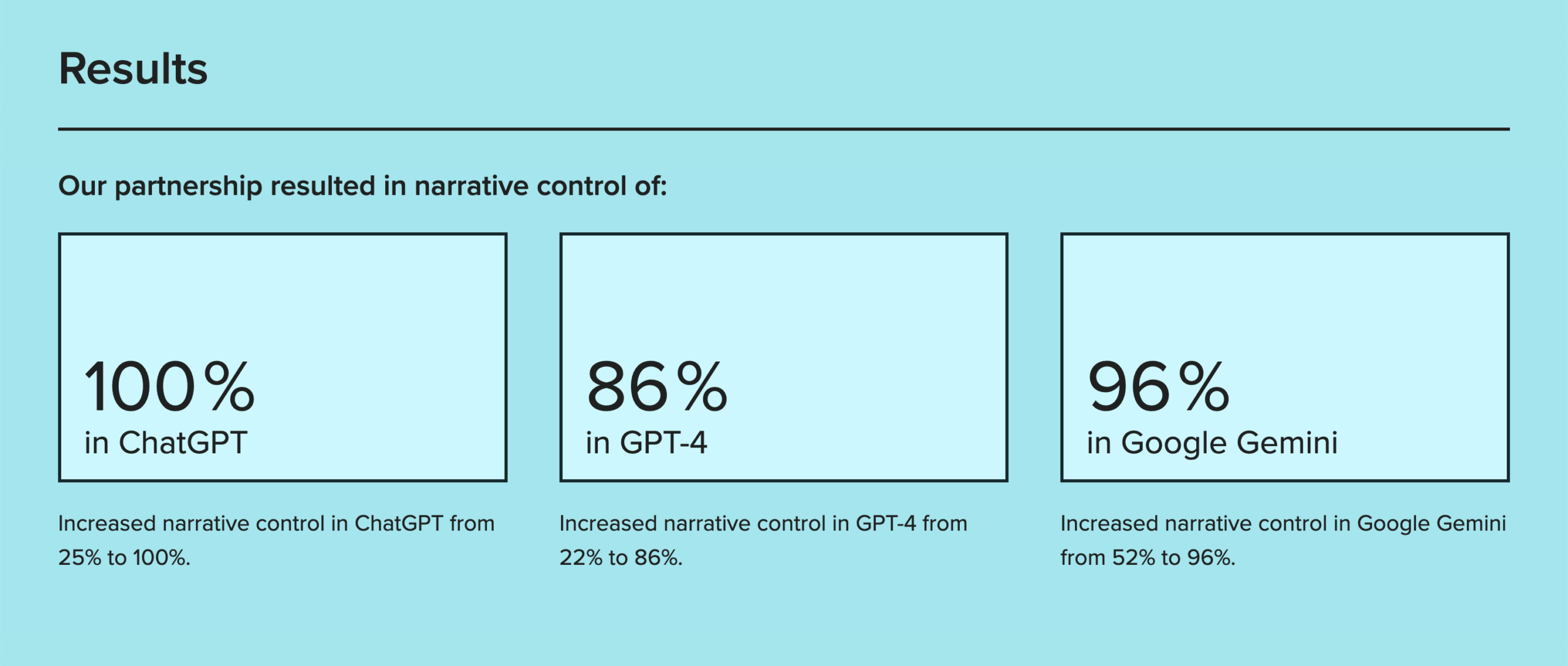
In one engagement, a financial industry executive achieved 94% controllability across ChatGPT and Gemini, boosting the consistency and accuracy of how AI described their professional reputation. In another, a global software company transformed broken messaging into a consistent narrative across search and AI.
Neither outcome involved unethical manipulation of AI responses. Both resulted from a strong digital ecosystem and strategic communications.
The bottom line is that improving the quality, number, and authority of brand assets improves your company’s representation across the most vital online channels.
Modern Crisis Management Requires a Second Recovery Phase
Traditional crisis communications is a must. Brands need experienced comms experts to engage media, reassure stakeholders, coordinate messaging, and respond when issues emerge. But PR and comms alone are insufficient.
A two-phase crisis approach is best. The first phase stabilizes today’s conversation and narrative. The second focuses on rebuilding brand reputation and maintaining it in the longer term.
Start by mapping how your organization appears across search and AI. Identify where outdated narratives are shaping perception. In addition to PR and comms, develop owned content to ensure the record reflects reality instead of the worst moment of a temporary crisis.
Generative AI doesn’t ask whether your crisis was managed successfully. It asks what the internet believes about your company. And increasingly, that’s the answer your stakeholders believe, too.